
You have spent weeks collecting records, filling in forms, and double checking every date. Then you spot a birth certificate in Spanish, a diploma in Arabic, or a court record in Haitian Creole. That one folder can hold up a case for months if the translation is wrong. USCIS officers cannot give weight to a document they cannot read, so they expect a specific package for every foreign language page. Here is what that package looks like.
What Does USCIS Require for a Foreign Language Document?
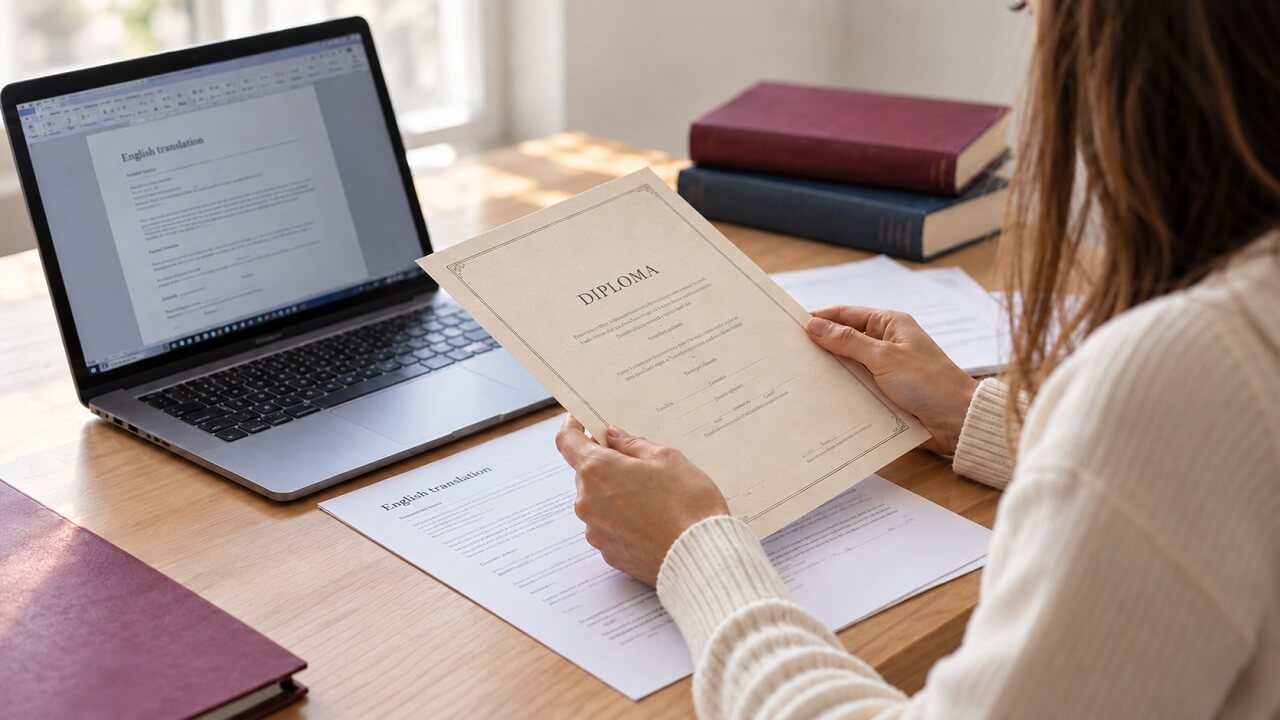
Every document that contains foreign language text must come with a full English translation and a signed statement from the translator. Under 8 CFR 103.2(b)(3), that statement must confirm that the translation is complete and accurate, and that the translator is competent to translate from the foreign language into English.

The rule covers every benefit request, from green cards to naturalization. That is the whole legal standard. The rest is about meeting it without drawing a Request for Evidence.
If your papers are ready for translation, we can prepare certified versions that follow every requirement in this guide.
USCIS Translation Requirements for the Translated Text
Officers compare your translation against the original, line by line. Anything missing or paraphrased gives them a reason to question the entire file.
Translate everything on the page
The translation must cover every part of the original, including stamps, seals, signatures, and marginal notes. A summary does not meet the standard. That small round stamp in the corner you assumed nobody would read? It gets translated too.
Mark what you cannot read
Faded ink and cut off seals happen. The translator should flag them in brackets, for example [illegible] or [illegible seal], instead of skipping them silently.
Keep the layout close to the original
When the translation follows the structure of the source page, the officer can match each line to its counterpart in seconds. That speeds up review and cuts down on questions.

What the Translator’s Certification Must Include
The certification is a short signed statement that travels with the translation. The regulation sets the core content, and the translator’s details let USCIS verify who signed it. The regulation does not prescribe a format, so a clear typed statement works.
The statement itself
It should say that the translator is competent in English and the source language, and that the translation is complete and accurate.
Translator details to add
- Full name
- Signature
- Address and contact information
- Date of certification
Each translated document needs its own certification attached to that specific translation. One page covering a whole stack of papers invites questions.
Who Is Allowed to Translate for USCIS
Any competent individual or company can certify a translation. USCIS does not keep a list of approved translators.
Can you translate your own documents?
The regulation does not forbid it. The risk is practical: USCIS may question a translation prepared by the applicant or a relative with a direct interest in the outcome, and bias is the usual concern. In family based cases, where credibility carries extra weight, an independent translator is the safer route.
Do you need an ATA certified translator or a notary?
Neither is required. ATA credentials show experience, but USCIS does not ask for them. Notarization is not part of the regulation either. Some consulates and other agencies request it separately, so check each recipient’s rules.
Common Documents That Need Translation
The papers below show up in most filings. Civil records come first, and a careless translation of a birth certificate is one of the quickest ways to slow a case. Our birth certificate translation services cover the details that tend to get missed.
| Document | Parts people forget | Why it matters |
|---|---|---|
| Birth certificate | Stamps, registry numbers, handwritten margin notes | Proves identity and family relationships |
| Marriage certificate | Seals, witness names, later annotations | Supports relationship evidence in family based cases |
| Police and court records | Case numbers, stamps, handwritten dispositions | USCIS asks for records of all charges, arrests, or convictions |
| Diplomas and transcripts | Grading scales, seals, footnotes | Documents education and qualifications |
Filing a mixed set of papers? Ordering everything together through one document translation service keeps names and dates consistent across the whole package.
Submitting Your Translations Without Problems
A correct translation can still stumble at the filing stage. A few habits prevent that:
- Send copies of your originals unless the form instructions ask for the originals. The I-485 checklist says plainly not to send originals without a specific request.
- Place each certification directly behind its translation, with a copy of the source document next to it.
- Spell names, dates, and places exactly as they appear on your forms.
- Scan documents clearly. A blurry page forces the translator to bracket text that could have been read.
Keep your originals safe, because the USCIS Policy Manual lets officers request them when a photocopy looks altered.
Working with a rare language? Check all the languages we translate before you start looking elsewhere.

Frequently Asked Questions
What if my document is partly in English?
Any portion in a foreign language still needs a translation. The regulation applies to any document containing foreign language text.
Can one certification cover several documents?
No. Each translated document should carry its own certification.
Does USCIS accept a scanned or electronic signature on the certification?
Generally yes, when you submit a copy of the originally signed certification, unless a wet ink signature is specifically required for your filing.
What happens if USCIS questions my translation?
You will usually receive a written notice naming the problem, such as a missing certification. Correct that exact issue and send the fixed translation with your response before the deadline in the notice.
How long does a certified translation take?
Standard turnaround at Elmura is 24 to 72 hours, and rush options are available. Send your files through our quote request page to get a timeline for your documents.
Conclusion
A compliant translation comes down to three things: every part of the document translated, a signed certification that covers accuracy and competence, and a translator you can document. Get those right and your papers stop being a source of worry.