


A deposition stalls because the witness and the court reporter cannot understand each other. A client signs a settlement agreement without fully grasping its terms. A hearing gets continued because no qualified interpreter was booked in time. These scenarios play out in Georgia courtrooms and law offices every week, and each one is preventable.
Why Professional Legal Interpretation Matters for Case Outcomes
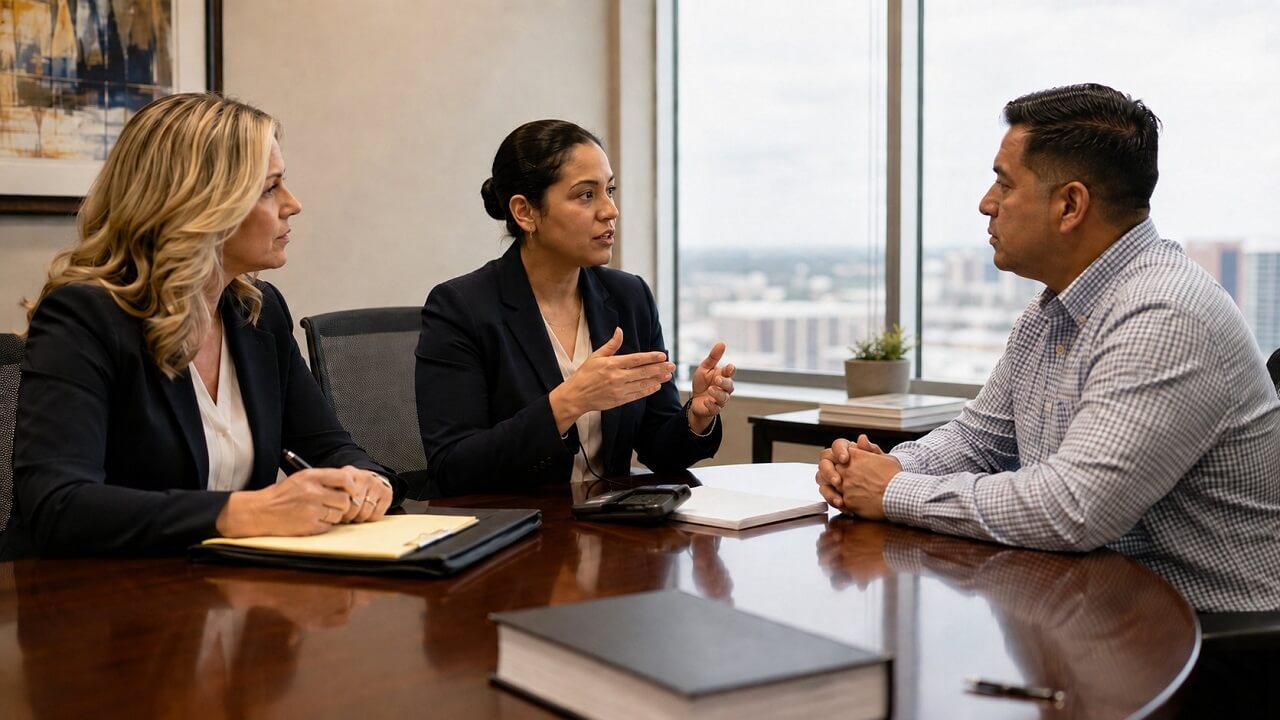
Georgia law firms benefit from professional legal interpreters because interpreters protect the accuracy of the legal record, satisfy court and constitutional obligations to non-English speakers, and reduce the risk of appeals, mistrials, or malpractice claims tied to miscommunication. Firms that work with credentialed interpreters, rather than bilingual staff or ad hoc volunteers, deliver more defensible outcomes for clients and stronger case files for the courts.
Georgia’s Growing Need for Legal Interpreters
Georgia’s population has diversified sharply over the past two decades, particularly in metro Atlanta, and its courts reflect that shift. Fulton County Superior Court alone logged over 1,200 requests for language interpreters in a single year, reflecting the most common languages spoken in Atlanta, including Spanish, Korean, Chinese, Portuguese, and Hindi.
The Georgia Commission on Interpreters was created by Supreme Court order in 2003 specifically to respond to this growing need, with a mandate to license interpreters and establish a statewide plan for their use in civil and criminal matters.
For law firms, this means the odds of encountering a client, witness, or opposing party who needs interpretation are no longer occasional. They are routine. A firm without a reliable interpreter partner is exposed every time a limited-English-proficient individual enters a case.
Georgia’s Court Interpreter Credentialing System
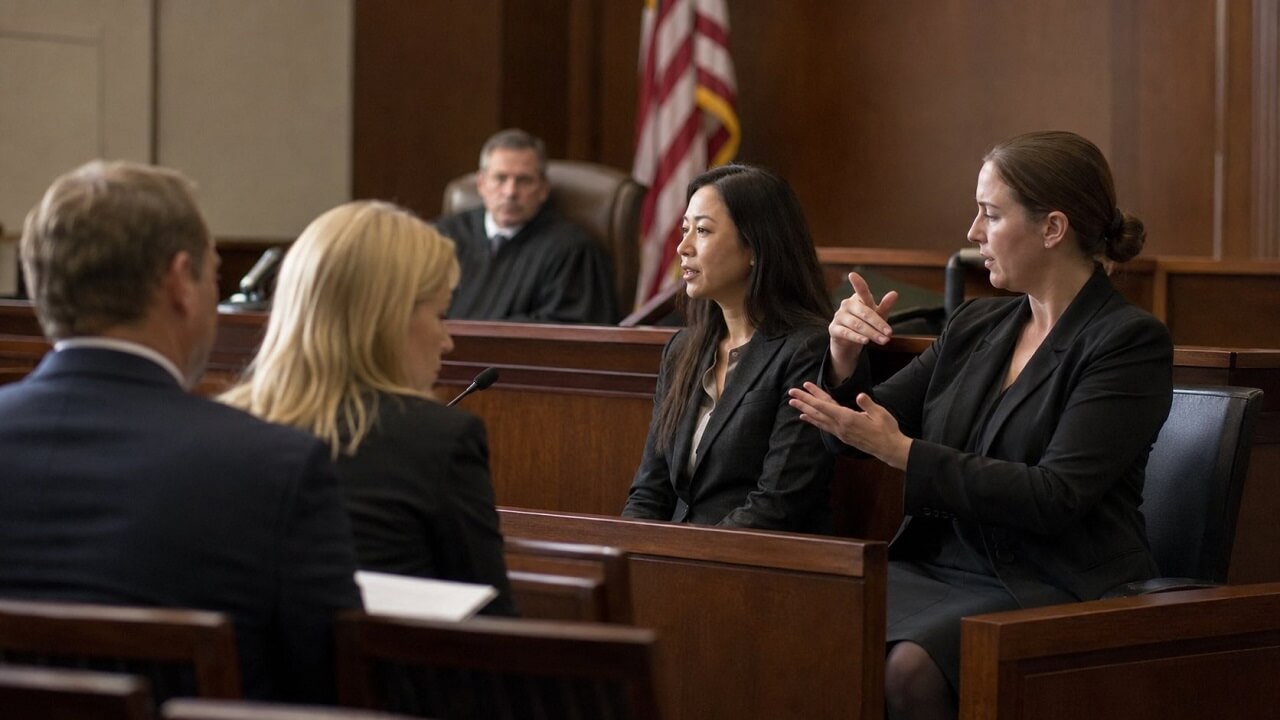
Georgia does not treat interpretation as an informal add-on to legal work. The Commission on Interpreters licenses interpreters under three designations, each reflecting a different level of testing and demonstrated skill.
| License Tier | What It Means |
| Certified | Passed the full written and oral proficiency exams in a language with an established testing track |
| Conditionally Approved | Met initial requirements but has not completed full oral certification, typically for less common languages |
| Registered | Completed orientation and background requirements, used mainly where certified interpreters are unavailable |
Interpreters take a formal oath before appearing in a Georgia proceeding, and they operate under a Code of Professional Responsibility that governs accuracy, impartiality, and confidentiality. Firms that verify an interpreter’s license status before a hearing avoid the awkward, and sometimes costly, situation of having testimony challenged because the interpreter lacked proper credentials.
Where Legal Interpreters Support a Firm’s Work

Legal interpreters do far more than translate words. They preserve legal meaning across languages that often have no direct equivalent for a given term. Their support spans nearly every stage of a case:
- Depositions and sworn statements. Interpreters trained in legal terminology ensure a witness’s answers are captured with the precision needed for later use as evidence.
- Client interviews and case preparation. Clients who fully understand the questions asked of them give more complete and accurate answers, which strengthens the case a firm can build.
- Settlement negotiations. Contract terms, financial obligations, and custody arrangements carry real consequences, and an interpreter helps ensure both sides negotiate from the same understanding.
- Courtroom trials and hearings. A judge or jury needs testimony rendered in real time, without delay or distortion, for the proceeding to move forward fairly.
- Attorney-client meetings. Regular case updates and legal advice must be relayed clearly so clients can make informed decisions about their own matters.
Many of these same cases also involve exhibits, prior filings, or client records in another language. Pairing an interpreter with certified document translation keeps the spoken and written record consistent throughout a case, rather than leaving gaps between what was said and what was filed.
The Cost of Skipping a Qualified Interpreter
Some firms lean on a bilingual paralegal or a family member of the client to interpret informally. This approach carries risk that outweighs the convenience.
Untrained interpretation introduces errors in legal terminology that a fluent speaker without legal training may not catch. It also raises conflict-of-interest concerns when the person interpreting has a personal stake in the outcome, which is common when a relative interprets for a family member.
Courts have overturned rulings and granted new hearings after finding that interpretation during a prior proceeding was inadequate. For a firm, that outcome means lost time, lost fees, and a client who no longer trusts the process.
A professional interpreter also brings cultural fluency that a purely bilingual but untrained speaker often lacks. Legal concepts do not always translate literally, and an interpreter who understands both the language and the legal system on each side can flag ambiguity before it becomes a problem in the record.
Compliance and Ethical Obligations
Federal law, including Title VI of the Civil Rights Act of 1964, places Georgia courts under an obligation to provide interpreters to limited-English-proficient individuals in civil and criminal proceedings, a requirement reinforced by Department of Justice guidance and the Georgia Supreme Court’s own rules on interpreter use.
Georgia courts operate under their own statewide language access plan tied to this obligation. For attorneys, the Georgia Rules of Professional Conduct require that clients understand the proceedings well enough to give informed consent and make decisions about their own representation. Working with a qualified interpreter is one of the clearest ways a firm can document that it met this standard.
Firms that build a relationship with a professional interpreting provider, rather than sourcing interpreters case by case, tend to have smoother scheduling for the 24 to 48 hours’ notice that credentialed interpreters typically require, and fewer last-minute continuances.
Our legal interpreting services connect Georgia firms with interpreters credentialed under the Commission’s standards, matched to the language pair and legal specialty each case requires.
Choosing the Right Interpreter Partner
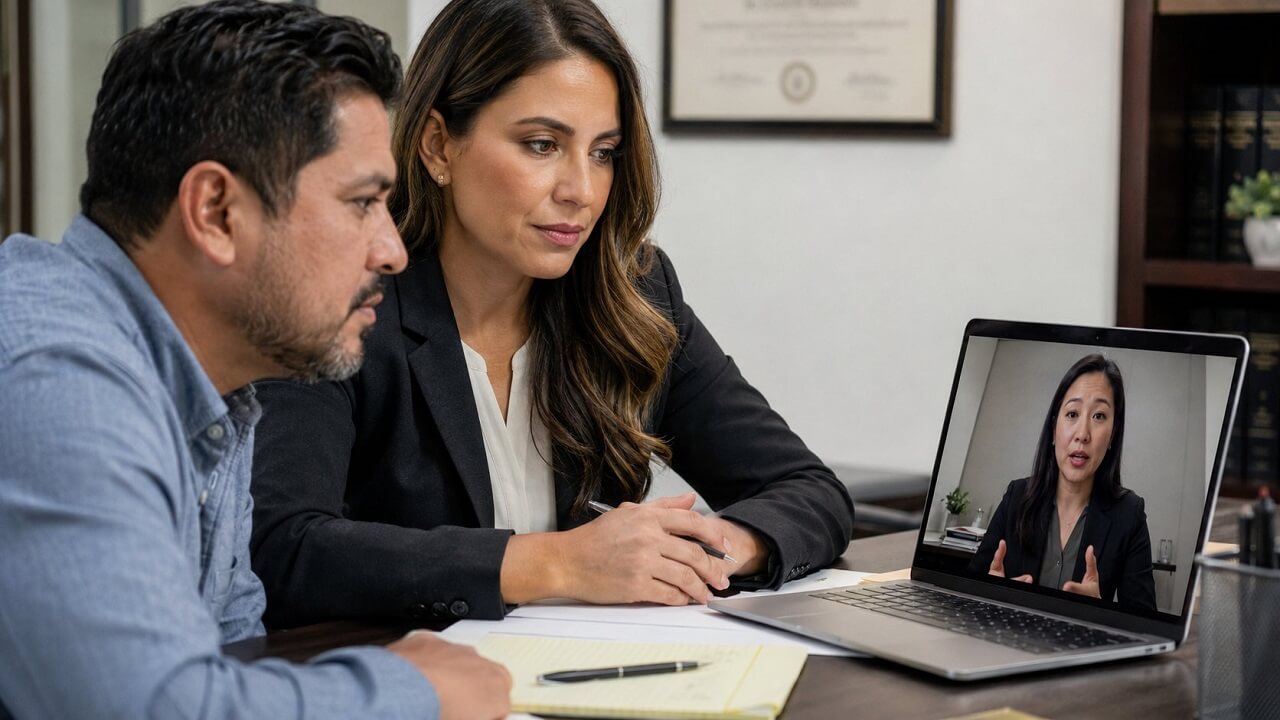
When evaluating an interpreting provider, Georgia firms should look for a few concrete markers rather than general promises of quality:
- Verified credentials tied to state or national certification bodies, not just self-reported fluency
- Experience with legal terminology specific to the case type, such as family law, immigration, or criminal defense
- A clear process for confidentiality and conflict checks
- Availability for both scheduled proceedings and urgent same-day requests
- Support for the specific language pair needed, including less common languages where certified interpreters are limited.
Frequently Asked Questions
View this post on Instagram
Conclusion
Language access is not a peripheral service for Georgia law firms. It shapes whether testimony holds up, whether clients understand their own cases, and whether a firm meets its ethical obligations.
For firms across Georgia looking to strengthen that part of their practice, our legal interpreting services offer a straightforward way to protect both clients and case outcomes.