

More than 29 million people in the United States are considered limited English proficient, and that number keeps climbing every year as immigration and global business grow across more than 200 languages. Behind every one of those individuals sits a decision that businesses, hospitals, courts, and families make constantly: do we ask someone who happens to speak two languages, or do we bring in a certified translator?
That single choice can determine whether a document holds up in an immigration office, whether a patient understands their diagnosis, or whether a contract means the same thing in both languages.
The Difference
A certified translator has completed formal training, passenekkaod an accredited exam, and holds credentials from a recognized body such as the American Translators Association, qualifying them to convert written text accurately while preserving tone, context, and legal meaning.
A bilingual speaker has fluency in two languages through upbringing, immersion, or study, but has not been trained or tested in the specific skill of converting written text between them. Fluency and translation competence are two different skill sets, and only one of them comes with a credential you can verify.
CTA – Need a document translated accurately and on record? Request a certified translation quote from our team and we’ll walk you through exactly what your document requires.
What Makes a Translator Certified
Certification is not a title anyone can claim after a few years of speaking two languages at home. It comes from sitting for an exam administered by a recognized organization and passing a review that tests source-language comprehension, target-language writing ability, and command of specialized terminology.
In the United States, the American Translators Association runs the most widely recognized certification exam for translators, and candidates who pass earn the right to stamp their work as ATA-certified. Other countries run their own systems. Australia’s NAATI, for example, requires professional accreditation before a translation is accepted for immigration, legal, or government use.
Certification also means the translator has agreed to a code of professional conduct. That typically includes confidentiality, impartiality, and accuracy obligations, along with continuing education requirements to keep the credential active.
When we take on a translation project, our linguists work under exactly this kind of accountability, which is part of why courts, universities, and government agencies accept our work without hesitation.
What Bilingual Fluency Actually Covers

Growing up in a two-language household, working abroad, or studying a second language through school all build genuine fluency. People who reach this level can hold conversations, read a menu, follow a meeting, and help a friend fill out a form.
What bilingual fluency does not automatically include is the discipline of rendering a written document with precise equivalence. Legal terms, medical instructions, and technical specifications often have no direct one-to-one match between languages, and finding the correct equivalent requires research skills and subject-matter knowledge that casual fluency does not teach.
This gap shows up most clearly with idioms and culturally loaded phrases. A bilingual employee translating word for word can produce a sentence that is grammatically correct but means something different, or nothing at all, to the reader. A trained translator recognizes these traps and knows how to preserve the intended meaning rather than the literal wording.
Where Bilingual Support Works Well

Bilingual staff are genuinely useful, and dismissing them entirely would be a mistake. Federal guidance under Title VI of the Civil Rights Act, which shapes how hospitals, schools, and agencies serve people with limited English proficiency, recognizes that bilingual employees performing their own job duties in another language are often the most practical option.
A Spanish-speaking receptionist checking in a Spanish-speaking patient, or a Vietnamese-speaking school liaison talking directly with parents, is doing routine work in a second language, and that is fine.
Bilingual staff work best in these situations:
- Everyday customer service and front-desk interactions
- Casual internal communication between coworkers
- Community outreach and informal cultural exchange
- Low-stakes correspondence where a minor phrasing issue carries no real consequence
The moment the same bilingual employee is asked to step outside their own role and convert a formal document, or interpret between two other parties in a high-stakes conversation, the guidance changes. At that point the task calls for someone trained specifically in that transfer of meaning.
Where Certified Translation Becomes Necessary
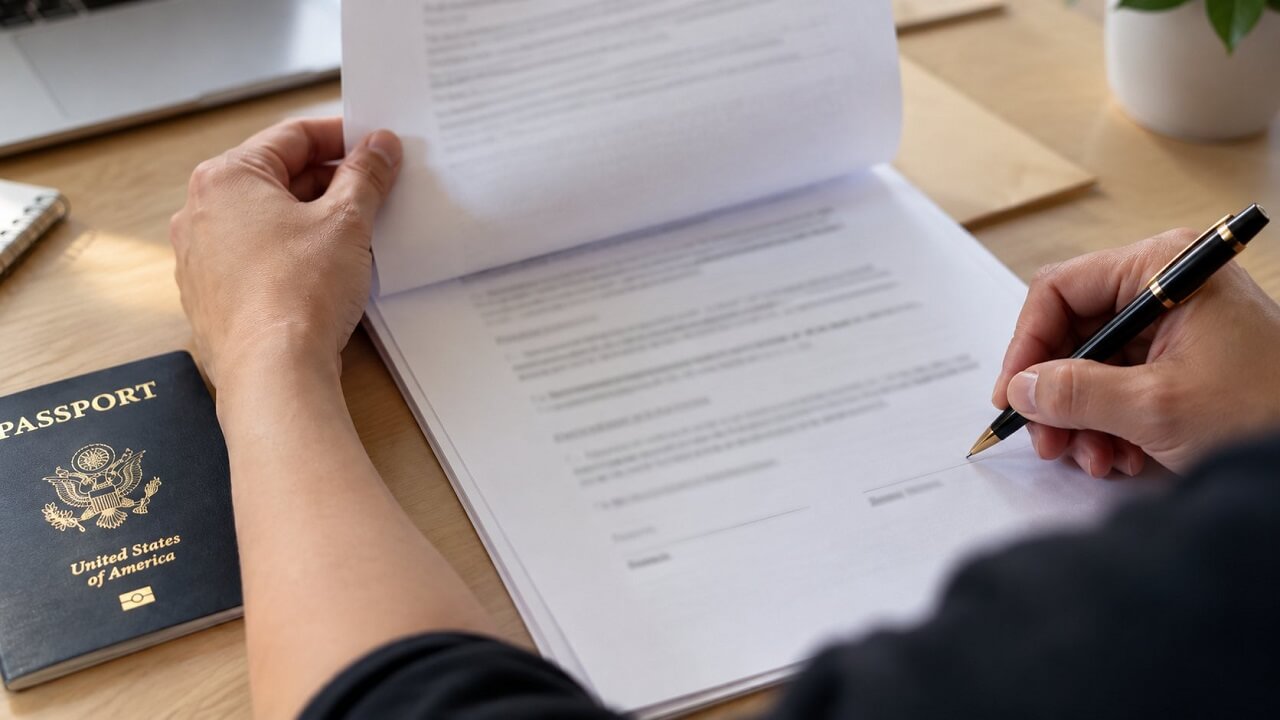
Certain categories of content carry enough weight that an error is not just embarrassing, it is costly or legally binding. These include:
- Immigration paperwork, birth certificates, and other documents submitted to government agencies
- Court filings, contracts, and other legally binding document translation materials
- Medical records, consent forms, and patient instructions
- Academic transcripts and diplomas submitted for credential evaluation
- Marketing and business materials that represent a company’s brand in a new market
Government agencies and courts frequently require a signed certificate of accuracy attached to the translated document, something only a professional translator can provide.
Using untrained bilingual staff for this category of work exposes an organization to real liability. If a translated consent form omits a risk, or a translated contract shifts an obligation, the mistake is not cosmetic. It can trigger disputes, regulatory penalties, or harm to the person relying on the document.
How to Tell the Two Apart Before You Hire

A few direct questions clear up the confusion quickly. Ask whether the person has a certification number that can be verified through an organization’s directory. Ask whether they specialize in the subject matter of your document, since legal, medical, and technical translation each require distinct terminology.
Ask how errors are caught before delivery, since a professional workflow includes a review step that casual bilingual work usually skips. If the answers are vague, the safer route is a certified professional, particularly for anything that will be submitted officially or that could affect someone’s health, rights, or finances.
Frequently Asked Questions
Conclusion
Bilingual fluency and certified translation solve different problems. One gets everyday conversations across the language gap. The other guarantees that a written document holds the same legal, medical, or official weight in the target language as it does in the original. Knowing which one your situation calls for protects you from delays, rejected paperwork, and the kind of costly misunderstanding that no business or family wants to deal with. When the document matters, we are here to make sure the translation matches it.