


A patient needs to describe a new symptom. A clinician needs a discharge summary in another language. Both situations require accurate medical communication, but they call for different skills. We help healthcare organizations identify the right language support for the conversation, the document, and the patient receiving care.
What Is the Difference Between a Medical Interpreter and a Medical Translator?
A medical interpreter conveys spoken or signed communication between patients and healthcare professionals in real time. A medical translator converts written healthcare content from one language into another.

Choose interpreting for appointments and clinical conversations, translation for documents, and both when care involves discussion and written instructions.
The interpreter vs translator distinction comes down to the communication format, working process, and final output.
| Point of comparison | Medical interpreting | Medical translation |
|---|---|---|
| Communication | Spoken or signed exchanges | Written healthcare content |
| Timing | During an interaction, with clarification when needed | Within an agreed deadline, allowing research and review |
| Typical assignment | Consultation, assessment, or treatment discussion | Medical record, consent form, or discharge instructions |
| Core strength | Listening or visual comprehension, memory, and accurate delivery | Research, specialized writing, terminology, and revision |
| Work setting | On-site, by telephone, or through video, as appropriate | Often remote, using secure document workflows |
What Does a Medical Interpreter Do During an Appointment?
During an appointment, interpreters help patients describe symptoms, ask questions, and understand the clinician’s explanations.

The work is more demanding than replacing individual words. Patients may describe symptoms indirectly, use regional expressions, or pause when discussing something distressing. Clinicians may use unfamiliar terminology or explain several treatment options quickly.
A medical interpreter preserves the meaning and tone of these exchanges, asks for clarification when necessary, and communicates questions in both directions. The role supports the conversation without taking over the clinician’s responsibility to explain care or the patient’s right to decide.
Choosing the Appropriate Interpreting Format
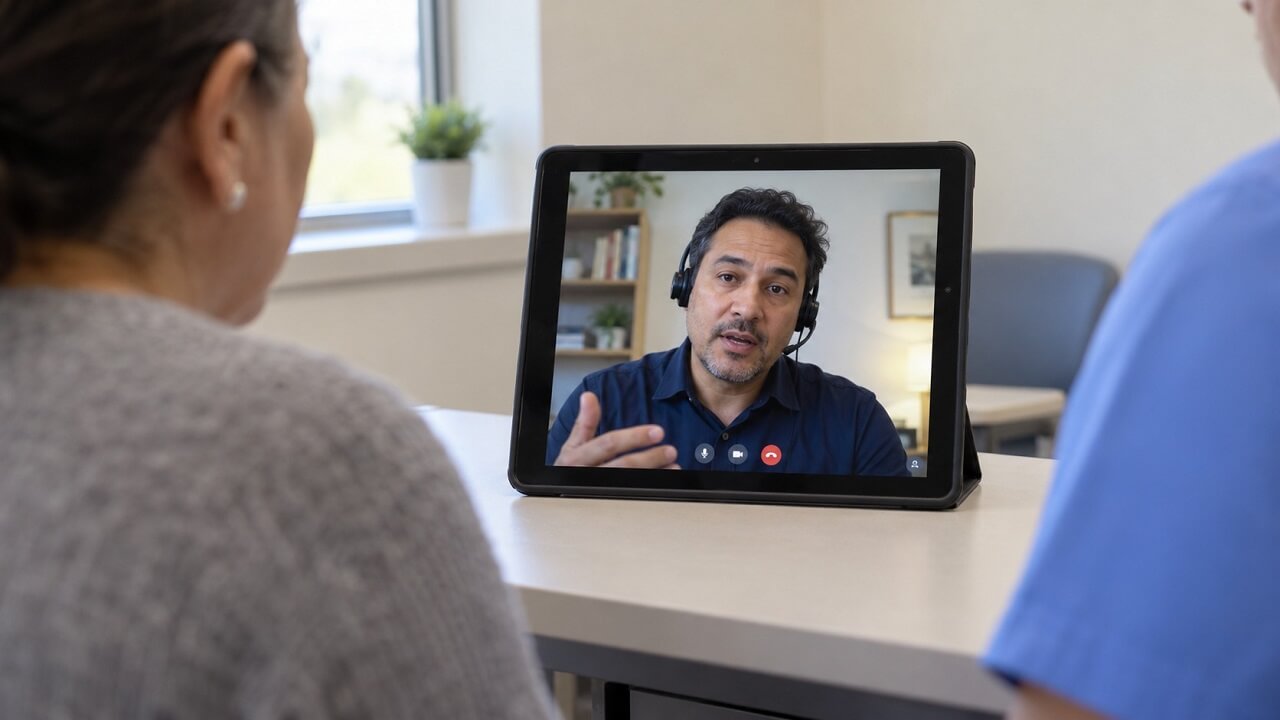
Medical interpreting may happen in person, over the phone, or by video. Telephone access can support spoken-language communication, while video allows participants to see signing and other visual information.
We provide video interpretation services for situations where remote visual communication is appropriate. The choice should reflect the patient’s communication needs, the clinical setting, and whether the connection allows everyone to participate effectively.
What Does a Medical Translator Check in a Document?
A medical translator produces a written text that preserves the source document’s clinical meaning and suits its intended readers. A specialist report for another physician requires different wording from a patient education handout.
This work can include records, laboratory reports, treatment plans, insurance materials, and public health information. Hospital translation services also support documents used repeatedly across departments, such as intake forms and discharge templates.
Medical translators need time to resolve terminology, flag unclear source text, and review the finished document. Their checks should cover:
- Medication names, dosages, units, and numerical values.
- Abbreviations, anatomical terms, and diagnostic language.
- Instructions, warnings, and the sequence of required actions.
- Tables, labels, and formatting that affect how readers understand information.
An ambiguous abbreviation should prompt a question, rather than a confident guess. Medical translation preserves the original information; it does not authorize someone to correct a treatment plan or add clinical advice.
For medication and research documentation, our pharmaceutical translation services address projects that require additional attention to specialized terminology and document requirements.
When Does a Patient Need Both Services?
Consider a patient preparing for surgery. Before the appointment, existing records may need translation so the care team can review the medical history. During the consultation, an interpreter helps the patient discuss risks, alternatives, and questions. Afterward, translated preparation instructions provide information the patient can consult at home.
Each step serves a different purpose. A translated consent form does not replace a meaningful consent conversation. Similarly, an interpreted discharge discussion does not provide a written reference for medication schedules or follow-up arrangements.
We recommend mapping language needs across the full care pathway. Include scheduling, clinical discussions, take-home materials, and later questions, rather than treating language support as a single appointment task.
What Qualifications Should Healthcare Organizations Look For?
Bilingual ability is a starting point. Healthcare assignments also require medical terminology, professional ethics, confidentiality, and competence in the specific service being delivered.
For an interpreting professional, evaluate interpreting training, language proficiency, relevant clinical experience, and the ability to request clarification openly when something is unclear. Recognized healthcare interpreting credentials can help demonstrate competence, but employers should check what a particular credential assesses and which languages it covers.
For a medical translator, review experience with comparable documents, writing ability in the target language, and the proposed revision process. General translation certification is not automatically evidence of medical specialization.
Some professionals qualify for both roles. We recommend assessing their interpreting and translation skills separately: strong performance in one does not establish competence in the other.
What Do U.S. Language Access Requirements Mean for Providers?

Language assistance can be a legal obligation for covered healthcare organizations. The U.S. Department of Health and Human Services explains that Title VI and Section 1557 require language access services without charge to patients in programs covered by those authorities.
Providers should determine their applicable obligations and establish procedures for obtaining qualified assistance. Staff need a clear process for recording language preferences, requesting support, and addressing communication problems.
We recommend including privacy safeguards in that process: approved file-transfer methods, controlled access to patient documents, and suitable arrangements for remote sessions. Contracting with a language provider supports this work, but does not by itself establish an organization’s overall compliance.
Medical Interpreter Salary vs Medical Translator Salary
Salary comparisons require some context because national statistics group interpreters and translators together rather than reporting these healthcare roles separately.
How Much Does a Medical Interpreter Make?
The U.S. Bureau of Labor Statistics reports a median annual wage of $60,170 in May 2025 for interpreters and translators combined. Within hospitals, the median for that combined occupation was $63,000. These figures exclude self-employed workers.
Neither figure is a standalone medical interpreter salary. Actual earnings vary with language, location, experience, credentials, employment arrangements, and hours worked.
What About Medical Translation Earnings?
A medical translator salary is equally difficult to summarize with one national figure. The same BLS occupational category includes written translation across multiple industries, rather than isolating medical specialists.
Freelance revenue also differs from employee pay. Project fees must cover research, revisions, administration, and periods without billable work. We recommend comparing positions with similar duties, hours, and benefits before drawing conclusions about which career pays more.
Frequently Asked Questions
Can an Interpreter Read a Medical Document Aloud in Another Language?
Yes. This is called sight translation. It may be appropriate for short documents within the interpreter’s competence, but lengthy or complex materials should be assessed for written translation.
What Happens If Handwritten Medical Notes Are Illegible?
We request clarification or a clearer copy before translating unclear passages. Names, abbreviations, and clinical details should never be guessed.
Should Patients Translate Their Own Medical Records?
We recommend professional translation for records used in clinical decisions. Patients can provide helpful context, but medical terminology and unfamiliar abbreviations require careful review.
Can Translated Instructions Help Patients Who Have Difficulty Reading?
Written translation alone may be insufficient. We recommend discussing reading needs with the care team so they can arrange an accessible format and an interpreted explanation where appropriate.
What Should Organizations Provide Before an Interpreted Appointment?
Share the language and dialect, appointment type, expected duration, and relevant communication needs. Provide approved background materials through a secure channel so the interpreter can prepare terminology.
Arranging Language Support With Our Team
To arrange the right support, we ask for the language pair, clinical subject, deadline or appointment time, and intended audience. For documents, include the file format and any receiving organization’s requirements. For appointments, identify the communication format and relevant accessibility needs.
We offer written healthcare translation alongside on-site, telephone, and video interpreting. Sharing these details helps us coordinate the appropriate service and clarify delivery expectations before work begins.