
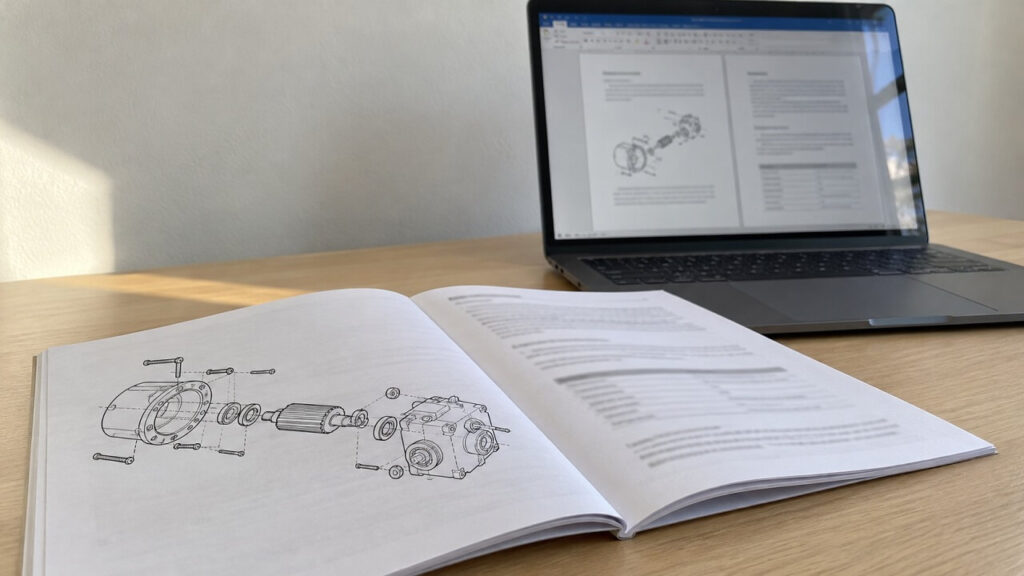
A translated manual should let someone install, operate, and maintain equipment without guessing. That means preserving the sequence of instructions, the meaning of warnings, and every measurement that affects how the product is used.
For U.S. manufacturers, the challenge may involve multilingual teams at home, equipment imported into the United States, or products shipped overseas. Each situation needs a clear plan.
We recommend settling terminology, review responsibilities, and delivery requirements before translation begins. Here is what manufacturers should check to get a manual ready for real use.
Key Takeaway
Manufacturers need to get technical terminology, safety instructions, measurements, and version control right so every translated manual accurately reflects the equipment and its approved operating procedures.
- Use translators with relevant technical expertise and an approved terminology glossary.
- Verify complete procedures, warnings, units, and applicable regulatory requirements.
- Check the final layout and keep every language version aligned with product updates.
Technical Manual Translation Starts Before the Final PDF
Translation belongs in the documentation schedule while there is still time to resolve questions with engineering. Waiting until shipping week leaves little room to correct ambiguous instructions or rebuild a crowded warning panel.
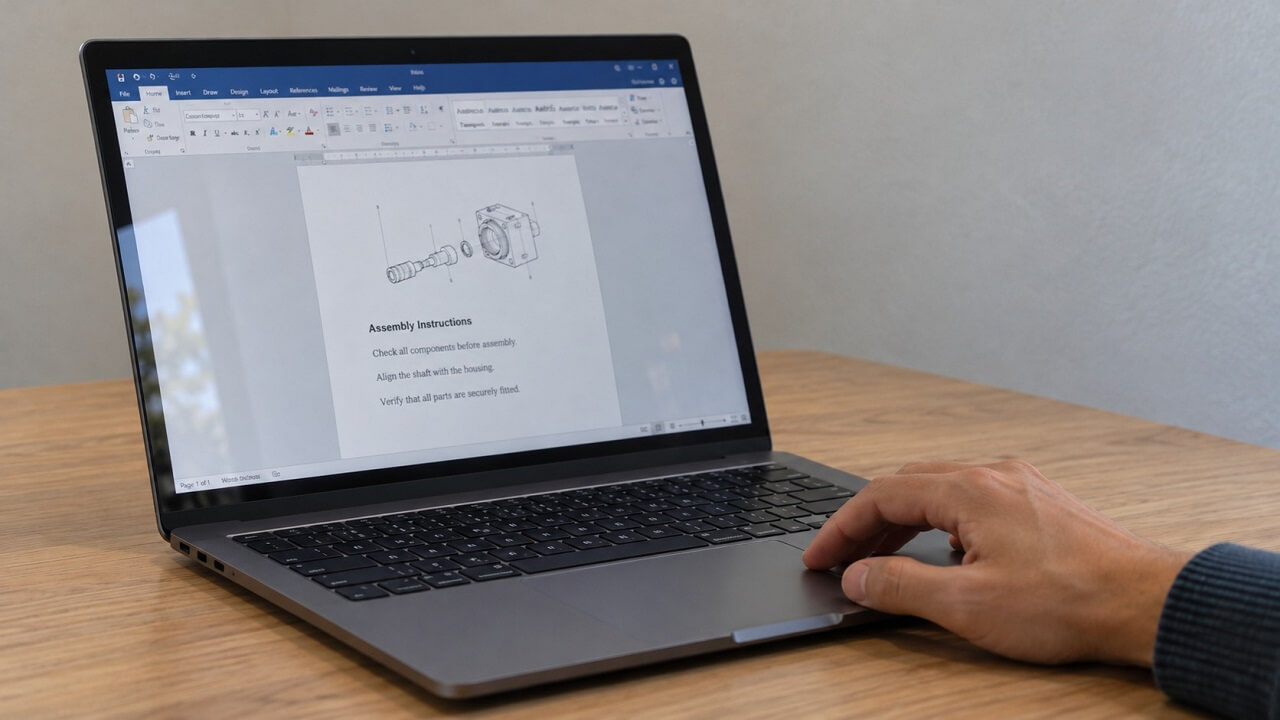
Our technical translation services cover operating manuals, product guides, specifications, and training materials. We work with industry terminology and supplied glossaries, with multilingual desktop publishing when needed.
Before requesting a quote, provide the approved source manual, editable files, target languages, product model, and required delivery date. Include images containing text and screenshots of the equipment interface. These details help establish the full scope.
Match the Translator to the Equipment
General fluency is not enough when instructions discuss hydraulic pressure, electrical isolation, or machining tolerances. Ask about experience with the actual subject, not simply “technical documents.”
We recommend giving translators access to an engineering contact. If “release the pressure” could refer to two different circuits, the manufacturer must clarify the instruction before anyone translates it.
Keep Terminology Consistent Across the Product
A component should have the same name in the manual, parts list, maintenance guide, and training material. Otherwise, readers may assume that two terms refer to different parts.
Build an approved glossary containing component names, abbreviations, warning terminology, and terms that must remain unchanged. Add context, such as a photograph or definition, when a word has several technical meanings.
Match Instructions to What Operators Actually See
If a machine screen displays “Reset,” a translated manual should identify that exact control. Translating the button name without explaining the visible English label can leave an operator searching for a button that does not exist.
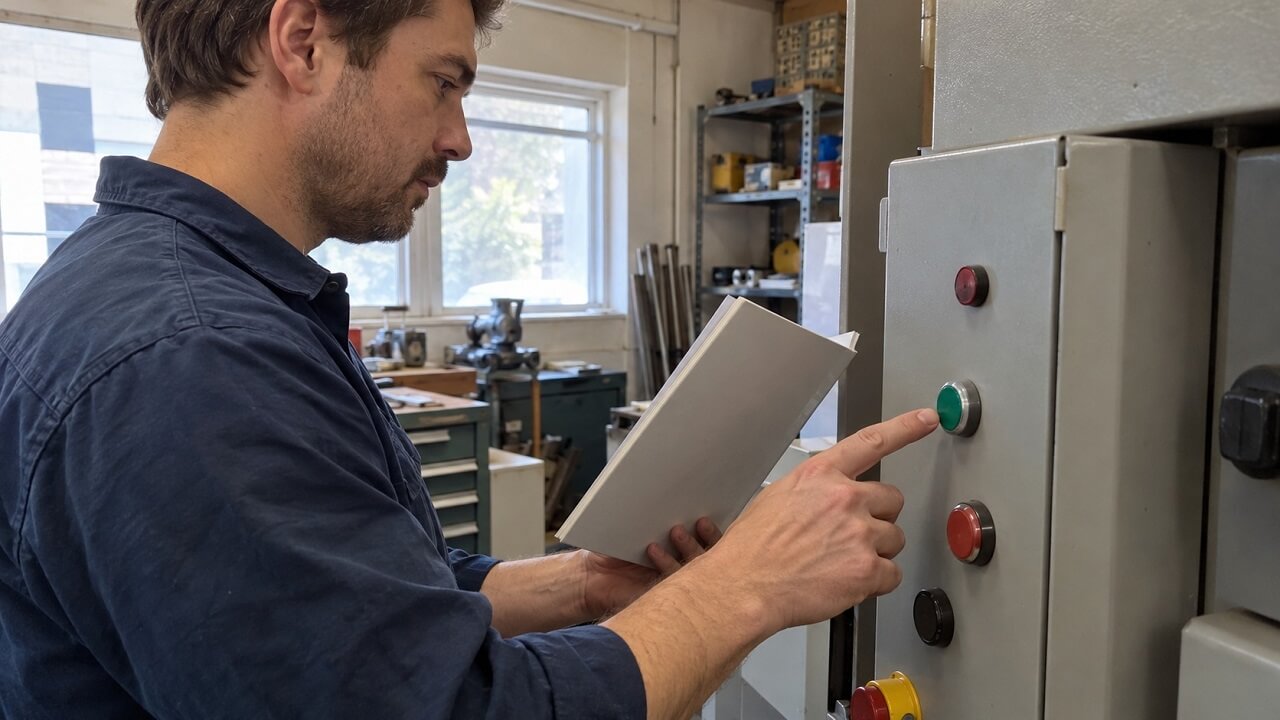
Coordinate the manual with the human machine interface, commonly called the HMI. Our localization services can support related interface content when software and documentation need to align.
For U.S. facilities serving Spanish speaking teams, agree on terminology suitable for the intended workforce. Our Spanish translation services can support those materials, using the manufacturer’s approved vocabulary.
Review Complete Procedures, Not Isolated Sentences
A sentence can be grammatically correct while the overall procedure is unsafe or impossible to follow. We recommend reviewing each task from its starting conditions through its final verification.
Consider a maintenance procedure that requires shutdown, isolation, pressure release, and inspection. The translation must preserve the approved order and any conditions governing each step. It must not turn a mandatory action into a suggestion.
Use a focused review checklist:
- Preserve prerequisites, step numbers, and dependencies.
- Check negatives such as “do not” and limits such as “only.”
- Verify values, units, tolerances, and decimal separators.
- Match part numbers, error codes, and figure references.
- Keep warnings beside the instructions they govern.
Do not let translators independently convert engineering specifications. If another unit system is needed, have engineering approve the converted values and rounding. A torque specification needs more control than a general temperature example.
Check the U.S. Requirements That Apply to Your Product
Compliance review should identify the product category, intended users, and applicable requirements. A machine manual and a medical device instruction booklet do not follow one universal translation rule.
OSHA Training Must Be Understandable
OSHA’s training policy states that training required by its standards must use language and vocabulary employees can understand. This concerns employer training obligations; it does not establish a blanket requirement to translate every manufacturer’s manual.
A translated manual can support training, but it does not replace demonstrations, practical instruction, or checks of understanding.
Medical Device Labeling Needs Separate Review
For medical devices, 21 CFR 801.15 addresses required labeling information and foreign language representations. Where labeling contains a foreign language representation, required label or labeling information must also appear in that language.
Medical device manufacturers should have their regulatory team determine how those rules apply to the instructions supplied with their device. Translation alone does not establish regulatory compliance.
For U.S. manufacturers exporting equipment, review destination requirements separately. Approval for the American market does not establish that the same documentation is sufficient elsewhere.
Inspect the Finished Manual After Formatting
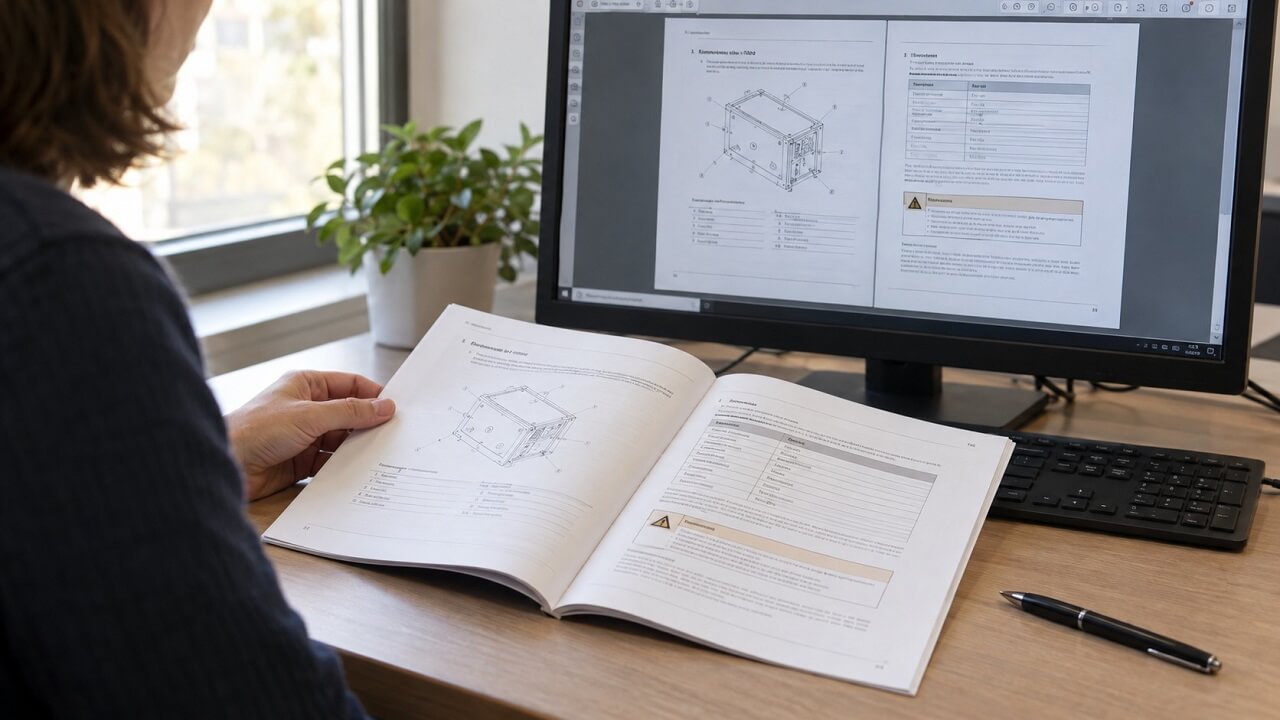
Translation review is not finished when the text is approved. Longer wording can push a warning onto another page, crowd a table, or separate a diagram from its explanation.
We recommend checking the actual delivery files against the approved source.
| Manual element | What to check | Who should verify |
|---|---|---|
| Safety warnings | Meaning, visibility, and placement | Language reviewer and safety specialist |
| Measurements | Values, units, tolerances, and symbols | Engineering reviewer |
| Diagrams | Labels, callouts, and figure references | Technical reviewer |
| Interface instructions | Wording matches visible controls | Product or software team |
| Final files | Complete pages, readable tables, and working navigation | Publishing reviewer |
Text embedded in illustrations needs its own plan. Confirm whether editable artwork is available and who will update it. Do not assume that translating the body text covers every label inside an image.
Plan for Revisions and Compare Quotes Carefully
Keep the source revision, translated revision, product model, and approval date together. When engineering changes a procedure, identify every affected language and related document.
A translation memory stores previously translated segments and can support consistency during updates. Still, reused wording needs review when equipment or context changes. An old instruction can be fluent and no longer correct.
Machine translation or AI output also needs qualified human review before release, especially for warnings and operating procedures.
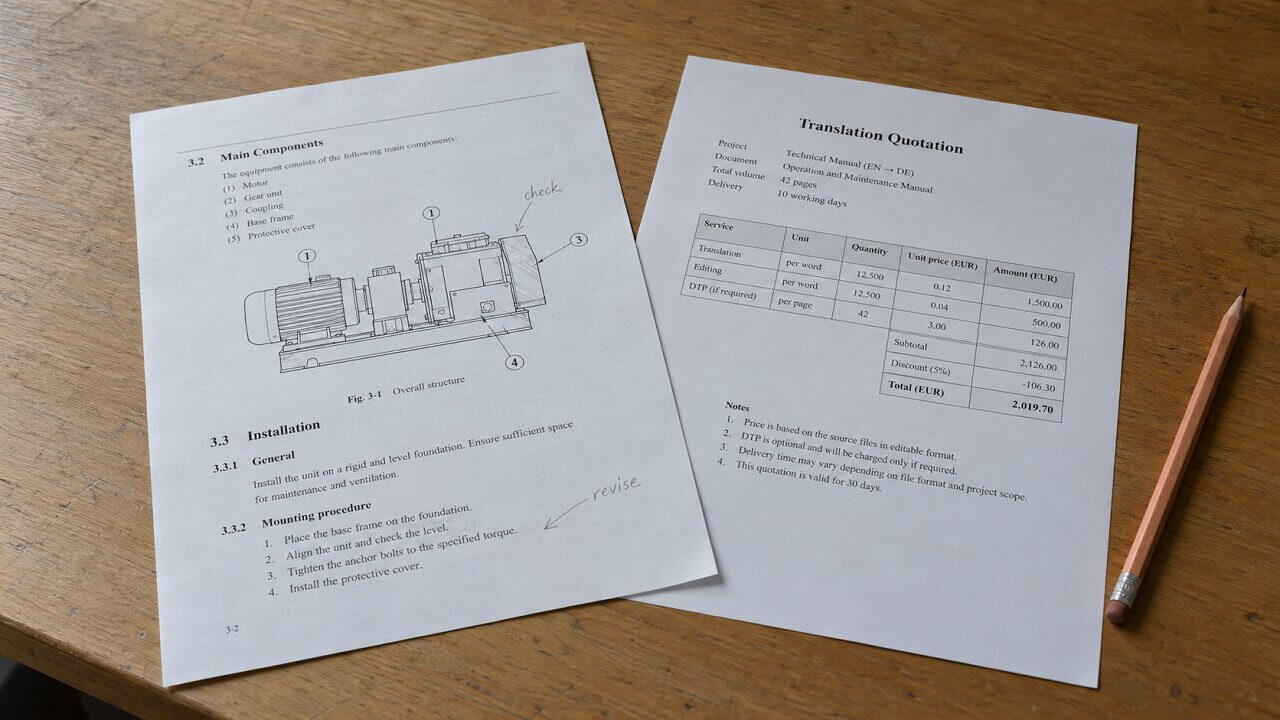
When comparing quotes, ask whether the scope includes translation, separate linguistic review, terminology work, formatting, and final file checks. Clarify how engineering questions and later revisions will be handled. Word count alone does not capture those tasks.
FAQ
These questions help manufacturers define the scope before approving a project.
How Much Does Technical Manual Translation Cost?
Pricing depends on language pair, volume, technical complexity, file quality, review requirements, and formatting. We recommend requesting a quote using the actual files, including diagrams and screenshots.
Can We Translate a Manual From a PDF?
Yes, but editable source files usually make updates and formatting easier. Scanned PDFs may require text extraction and additional checking, particularly for numbers, symbols, and tables.
Does Every Technical Manual Need a Certified Translation?
No. Certification depends on the recipient or submission requirements. A certificate of accuracy does not replace engineering review or confirm product compliance.
How Long Should We Allow for Translation?
The schedule should include translation, questions, review, formatting, and approval. Provide the files and deadline early so we can assess the scope rather than promise a universal turnaround.
Conclusion
Technical manual translation works best when manufacturers control the source, approve terminology, review complete procedures, and inspect the final files. We help carry technical information into another language while keeping engineering and regulatory decisions with the people responsible for the product. Start with the current manual and a clear review plan.