
A product demonstration can lose its audience when translated instructions disappear before viewers finish reading. An employee training video can create confusion when narration describes a different button from the one displayed. Organizations planning multilingual videos need a format that fits how their audiences watch, listen, and use the information.
Which Video Translation Method Should Organizations Choose?

Organizations should choose subtitles when viewers can comfortably read alongside the visuals, voiceover when spoken guidance supports the viewing task, and dubbing when translated character performances matter. Video translation covers all three approaches. The best fit depends on audience needs, viewing conditions, production requirements, and available budget.
What Does Video Translation Include?
Video translation involves adapting a video’s spoken and written content into another language. Teams may need translated scripts, subtitles, recorded narration, and revised graphics within the same project.
A software tutorial, for example, may contain spoken instructions, menu labels, warning messages, and a closing slide. Every element contributes to understanding. Leaving a warning untranslated can undermine an otherwise accurate recording.
Organizations using broader localization services can coordinate these elements with regional terminology, measurement units, and cultural references. They should define the complete scope before selecting an output format.
Our guide to translation vs transcription explains how recorded speech becomes source text for translation.
When Subtitling Fits the Viewing Experience
Subtitling places timed translated text on screen while preserving the original audio. It suits interviews, presentations, and social videos whose audiences can comfortably read while watching.

The main production challenge is reading time. Translators often need to condense speech while preserving its meaning. Sentence structure, line breaks, and placement affect how easily viewers follow the message.
A short interview with a mostly static image may accommodate subtitles well. A fast demonstration containing labels, diagrams, and several moving parts places greater demands on viewers’ attention.
Teams should test subtitles at the intended screen size. Text that looks clear on a desktop monitor can obscure a product or become difficult to read on a phone.
When Voiceover Supports Understanding
Voiceover delivers translated speech through a recorded narrator. Organizations commonly use it for onboarding, narrated presentations, explainers, and procedural demonstrations.
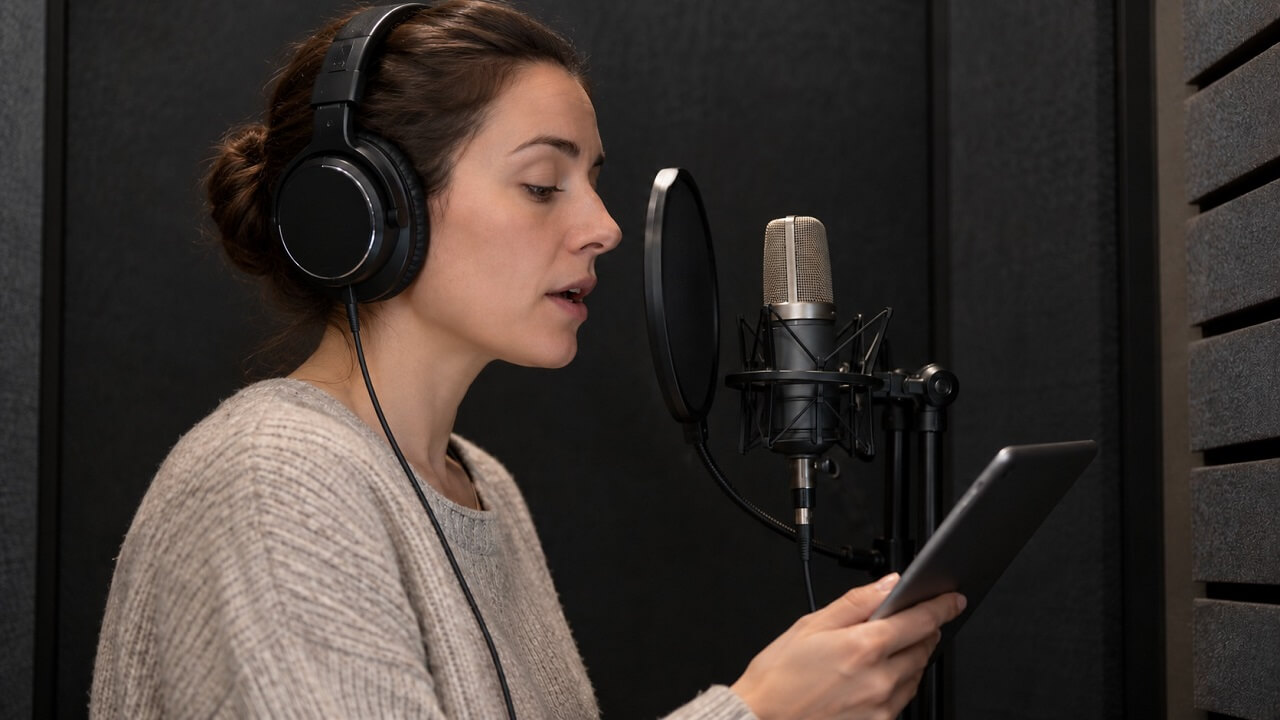
It helps viewers listen to instructions while watching the relevant action. A maintenance demonstration, for instance, can guide employees through a sequence as they observe the equipment.
Voiceover can replace an existing narration track or play over a lowered original voice. The latter approach is often used for interviews and documentary material.
Production requires an adapted script, suitable voice talent, pronunciation guidance, and audio mixing. The translated narration must fit the available scene time at a comfortable speaking pace. Teams should approve terminology and pronunciation before recording begins.
When Dubbing Is Appropriate
Dubbing replaces the original dialogue with performances in the target language. Productions involving visible speakers may require close alignment with mouth movements, gestures, and scene timing.
Organizations may consider dubbing for character-led learning, scripted campaigns, or entertainment content. Casting and performance direction become especially relevant when several characters have distinct personalities.
The required synchronization should be specified in the brief. Projects can call for different levels of timing precision, and a request for “translated audio” leaves important production decisions unresolved.
Four Checks Before Choosing a Format

Before approving a format, teams should assess how their intended viewers will experience the video. These four checks can help them identify practical requirements.
| Selection factor | Question teams should ask | Effect on the decision |
|---|---|---|
| Reading comfort | Can viewers follow timed text confidently? | Establishes whether subtitles are suitable |
| Playback environment | Will viewers reliably hear the audio? | Determines whether spoken delivery is practical |
| Screen content | How much text and action already occupy the frame? | Identifies competing demands on attention |
| Audience preference | What format do representative viewers prefer? | Guides the final format selection |
For projects serving several markets, teams should gather feedback from local reviewers or a small audience sample before extending the approach to every language version.
Accessibility Requirements Need Their Own Review
Accessibility planning covers information that translation alone may leave out.
W3C’s captions guidance explains that captions convey speech and meaningful non-speech sounds. Speaker identification, alarms, and relevant sound effects may be necessary for viewers who are Deaf or hard of hearing. Translated dialogue subtitles can omit those details.
Viewers who cannot see essential visual information may need audio description. W3C’s description guidance covers details such as actions, charts, and on-screen text. A translated voiceover should be assessed for how fully it communicates those visuals.
What Determines Cost and Turnaround?
Quotes depend on language pairs, runtime, speech density, source quality, speaker count, and deliverables. Subtitling generally requires fewer production stages. Recorded audio adds casting, recording, editing, and mixing; lip synchronization adds adaptation work.
A useful quote request includes:
- The final video and editable production files.
- Target languages, regional varieties, and publication platforms.
- Required subtitle, audio, and finished-video outputs.
- Review responsibilities, deadlines, and revision allowances.
Teams should also confirm voice usage rights and any restrictions on synthetic voices. Comparing quotes against the same brief makes differences in scope easier to identify.
How Teams Should Check the Finished Video

Reviewers should watch the finished video on its intended platform and devices. They should check terminology, names, numbers, timing, graphic placement, and synchronization with visible actions.
Automated transcripts require particular care. YouTube’s automatic captioning guidance identifies pronunciation, accents, dialects, and background noise as potential sources of errors. An incorrect source transcript can carry mistakes into every translated version.
A reviewer familiar with the subject should watch the full export and confirm that the instructions remain usable.
FAQ
Can viewers switch between subtitle languages?
Viewers can select their preferred language when the video player supports multiple subtitle tracks and those tracks have been uploaded. Organizations should confirm this capability with their hosting platform before preparing the language versions.
Can a subtitle file be reused after a video is shortened?
It usually needs retiming. Removing or rearranging footage changes the relationship between timestamps and speech, so teams should check the subtitle file against the revised edit.
Do right-to-left languages require special subtitle preparation?
Arabic and Hebrew subtitles require checks for text direction, punctuation, and mixed content such as numbers or English product names. Teams should test the finished subtitles in the intended player to confirm that everything displays correctly.
Should confidential footage be redacted before translation?
Teams should assess which personal or sensitive details the language provider needs. They can agree on secure transfer, access limits, confidentiality terms, and deletion arrangements before sharing footage.
Conclusion
Organizations can make a sound production decision by documenting their audience, viewing conditions, and intended outcome. A clear brief gives language and production teams a shared basis for delivery. We can help organizations plan subtitles, voiceover, or dubbing for their target audiences.