
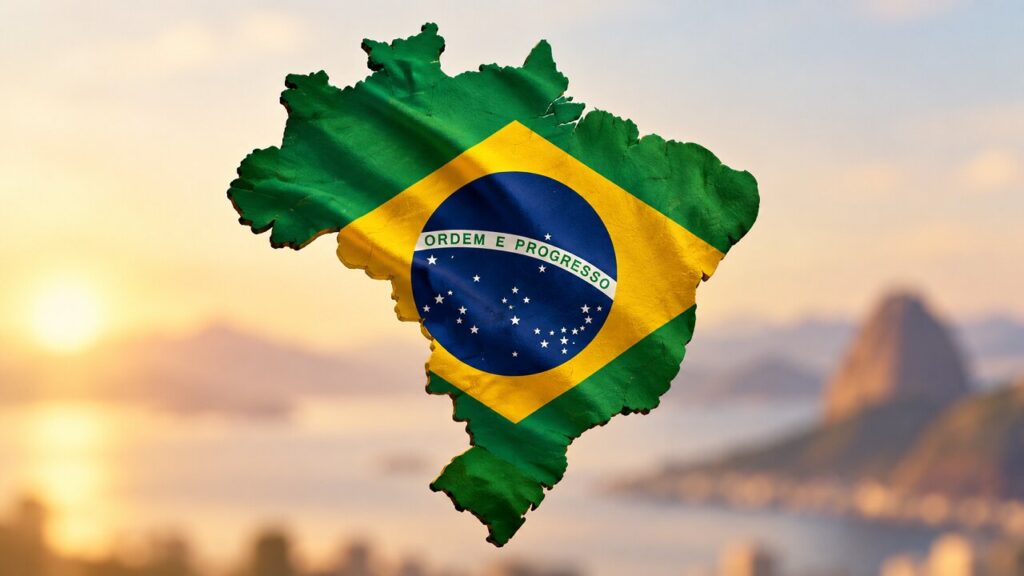
Step off a plane in São Paulo and then again in Buenos Aires, and the first thing you notice is how different the two cities sound.
Brazil sits in the middle of a continent where almost everyone else speaks Spanish, yet it built its own linguistic identity around a language that arrived with Portuguese sailors in 1500 and never left.
That single fact shapes everything from how Brazilian businesses write contracts to how tourists order coffee in Rio.
Portuguese Is the Language Brazilians Speak
Portuguese is Brazil’s official language and the one spoken by nearly the entire population, making Brazil the largest Portuguese-speaking country on earth by a wide margin.
It is the language used in schools, courts, television, and everyday conversation across all 26 states and the Federal District. If you are asking what language to expect in Brazil, whether for a trip, a business deal, or a translation project, Portuguese is the answer.
Need to communicate with Brazilian clients, partners, or authorities and want the details right the first time? Our Portuguese translation services cover everything from contracts to marketing content, handled by linguists who work in Brazilian Portuguese every day.
Note: When requesting a quote, mention Brazilian Portuguese specifically. This helps us match you with the right linguist from the start.
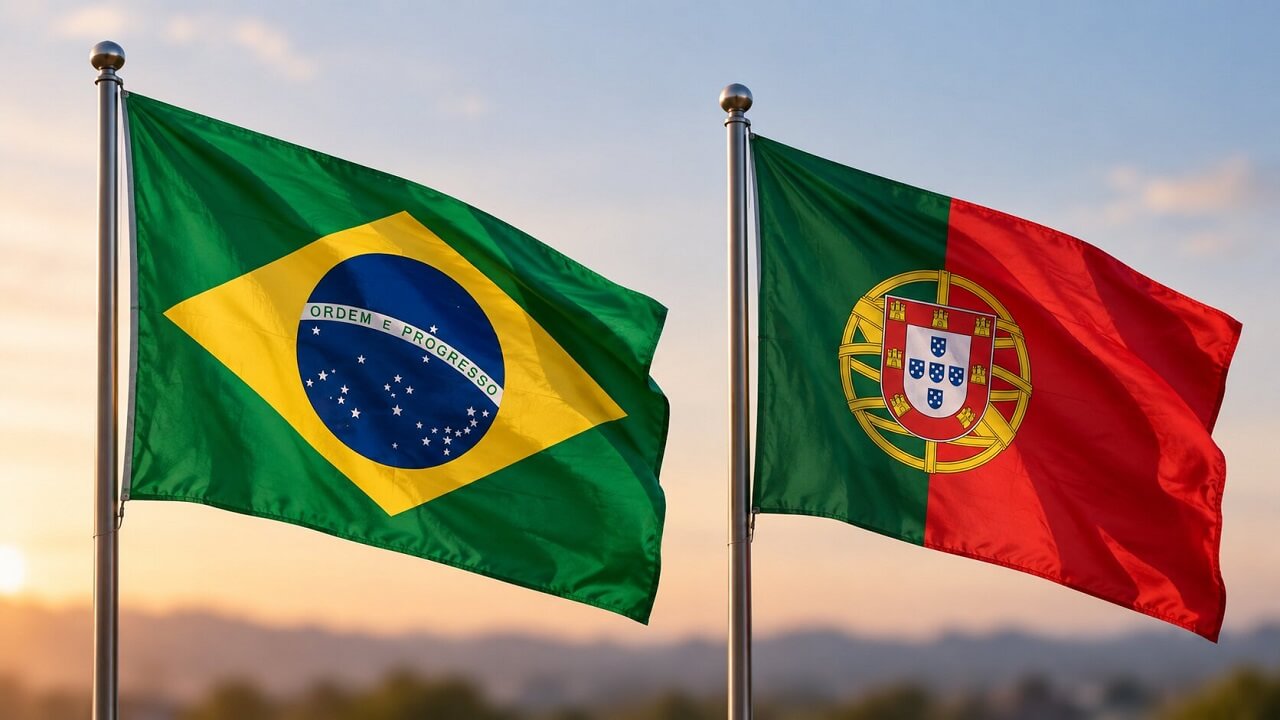
Brazilian Portuguese and European Portuguese Are Not the Same Language to Write For
Brazilian and European Portuguese share a grammar and a name, but they do not read the same way on a page. Word choice shifts constantly. A bus in Brazil is an “ônibus,” in Portugal it is an “autocarro.”
A mobile phone is “celular” in Brazil and “telemóvel” in Portugal. Verb conjugation habits differ too, and Brazilian writing tends to run warmer and more direct, while European Portuguese leans more formal on paper.
This matters most when the stakes are high. A contract, a medical form, or a product manual translated with the wrong variant can confuse the reader or, worse, misstate a legal term.
Businesses expanding into Brazil often assume a Portugal-based translator can cover both markets. In practice, document work aimed at Brazilian readers needs a Brazilian Portuguese translator from the start. Our document translation service is built around exactly that distinction, matching each project to a linguist who works in the right variant.
Regional Accents Change the Sound of Brazilian Portuguese
Portuguese is one language in Brazil, but it does not sound the same from one region to the next. Accent, rhythm, and slang shift sharply depending on where you are.
| Region | Accent Name | What Stands Out |
|---|---|---|
| Rio de Janeiro | Carioca | Soft “s” sounds pronounced like “sh,” fast rhythm |
| São Paulo | Paulistano | Flatter, quicker delivery, heavy use of local slang |
| Minas Gerais | Mineiro | Words often shortened or run together |
| Northeast (Bahia, Pernambuco, Ceará) | Nordestino | Melodic, drawn-out vowels, distinct song-like cadence |
| Rio Grande do Sul | Gaúcho | Influence from Spanish-speaking neighbors, use of “tu” instead of “você” |
| Interior São Paulo and Minas | Caipira | Strong retroflex “r,” rural roots |
A Brazilian from Porto Alegre and one from Recife can understand each other without trouble, but a foreigner who learned Portuguese from a textbook, or from a European Portuguese course, will often struggle at first with a strong nordestino or gaúcho accent.
This is one of the reasons written content aimed at a national Brazilian audience is usually written in a neutral register rather than mimicking any single region.
German, Italian, and Japanese Communities Still Shape How Brazil Sounds and Tastes
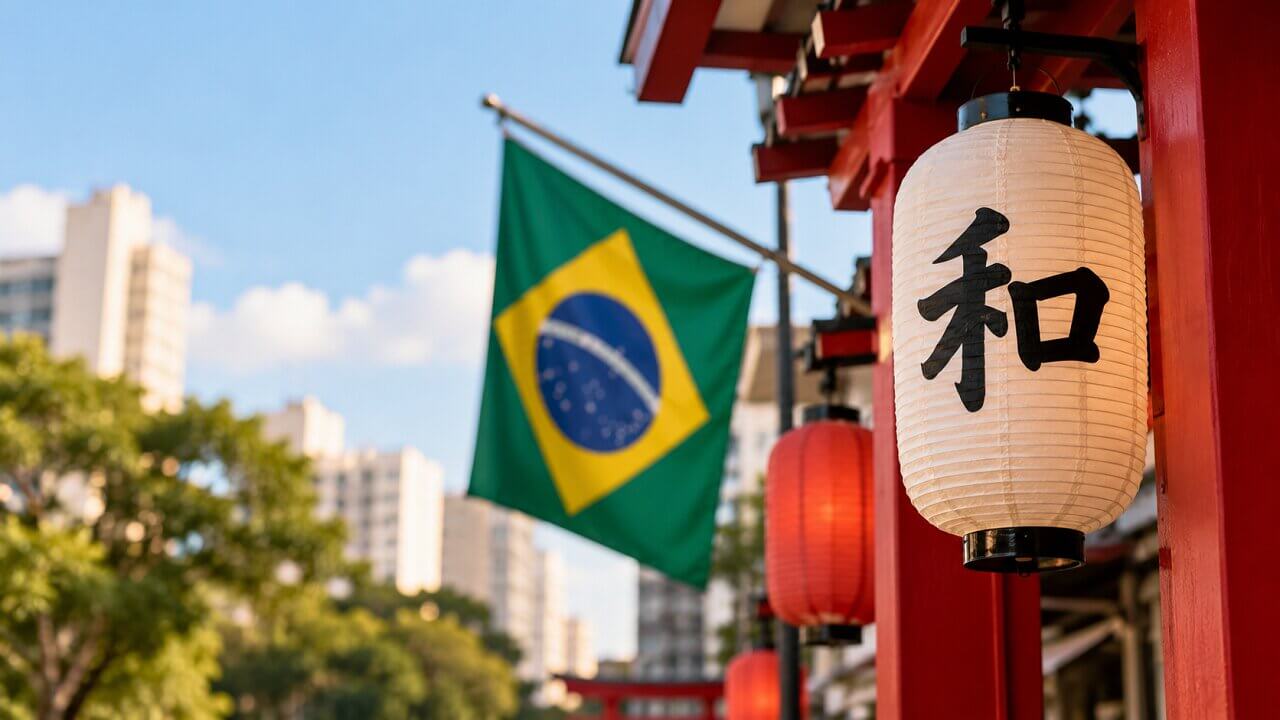
Portuguese dominates, but it was never the only language brought to Brazil. Waves of European and Asian immigration left marks that are still visible today, especially in the same southern states where the gaúcho accent developed.
Blumenau, in Santa Catarina, hosts Oktoberfest, the second largest celebration of its kind in the world after Munich itself, and German is still spoken at home in some of the surrounding towns. In the Serra Gaúcha region around Bento Gonçalves and Caxias do Sul, Italian immigrant families built the foundation of Brazil’s modern wine industry, and Italian surnames and traditions remain part of daily life there.
São Paulo, meanwhile, holds the largest population of Japanese descendants outside Japan itself, a community whose influence shows up constantly in Brazilian food culture, from temaki shops on nearly every city block to izakaya-style restaurants that have become standard weeknight options rather than a novelty.
None of these communities changed Brazil’s official language. Portuguese remains the language of schools, courts, and business everywhere in the country. What they changed is texture: surnames, festivals, menus, and pockets of bilingual households that give certain regions a distinct cultural layer on top of a shared national language.
Portunhol and Brazil’s Border Language Blend
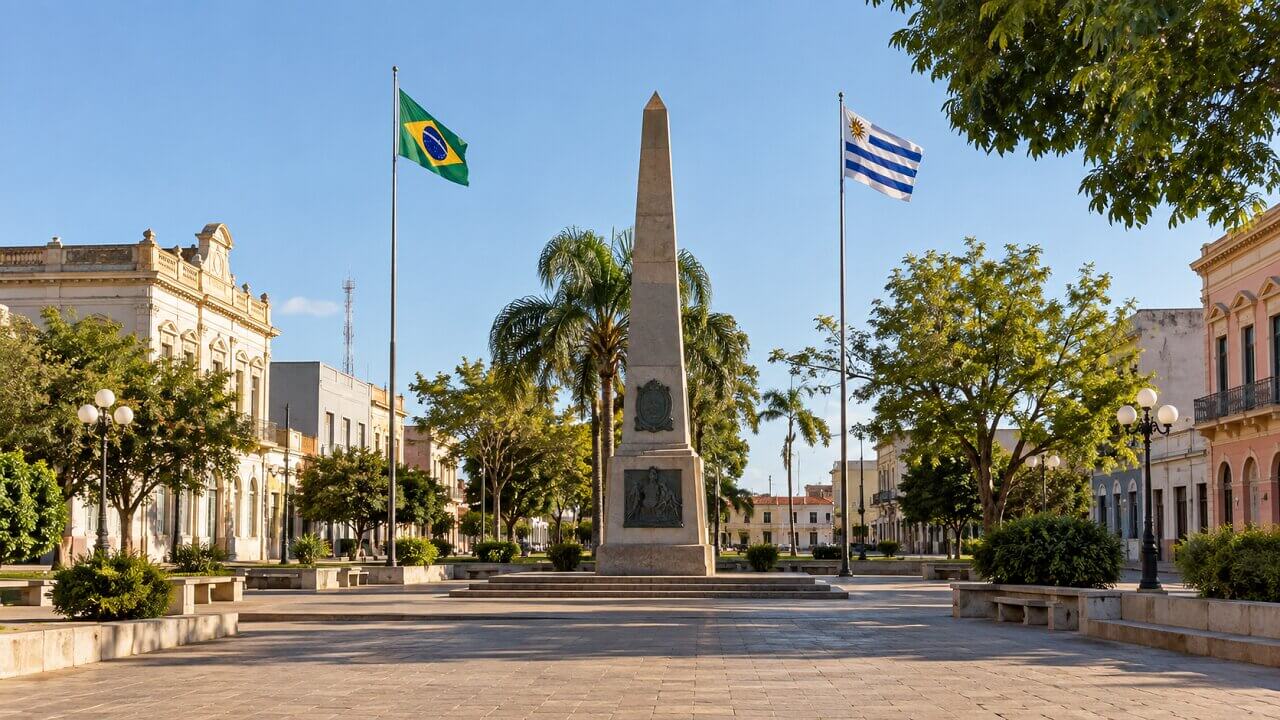
Along Brazil’s southern border with Uruguay and Argentina, everyday speech does not stay neatly inside one language.
Communities in towns like Santana do Livramento, which sits directly across from the Uruguayan city of Rivera, have developed what linguists call Portunhol Riverense, a stable blend of Portuguese and Spanish used at home and in local shops long before either government gave it any formal recognition. It is not the same as someone simply mixing up two languages badly. It functions as its own local speech pattern, passed down within families.
This kind of border bilingualism also shows up in tourism corridors near Foz do Iguaçu, where Brazilian, Argentine, and Paraguayan visitors cross constantly and vendors often switch between Portuguese and Spanish mid-sentence.
Travelers moving through these border regions benefit from planning ahead, since signage, menus, and transport information are not always translated consistently. Our travel translation services help tour operators and travel businesses prepare materials that actually work for visitors crossing these language lines.
Brazil’s Indigenous Languages Are Disappearing Faster Than Most People Realize
Before Portuguese arrived, hundreds of indigenous languages were spoken across what is now Brazil. Many of those languages are still alive today, but a large share of them are classified as endangered or critically endangered by linguists tracking language loss worldwide.
A few examples still spoken by active communities:
- Guarani, spoken across several southern and central-western states
- Yanomami, spoken in the Amazon along the border with Venezuela
- Ticuna, spoken along the upper Amazon near the tri-border area with Peru and Colombia
What puts these languages at risk is not a lack of speakers overnight but a generational break. When a language stops being passed from grandparents to grandchildren, it can vanish within two generations even if hundreds of people still speak it today.
Brazilian universities and indigenous organizations run documentation and revitalization projects, but the pressure from Portuguese as the language of schooling, media, and commerce is constant.
Why Getting the Language Right Matters for Doing Business in Brazil

Language mistakes in Brazil rarely stop at embarrassment. They cost time, money, and sometimes legal standing.
A mistranslated dosage instruction on a medical product label, an inconsistent term in a series of contracts, or a website that reads like it was run through a machine translator all signal the same thing to a Brazilian audience: the company on the other end did not take the market seriously.
This shows up most sharply in regulated industries. Pharmaceutical inserts, clinical trial documents, and patient consent forms need translators who understand both the language and the terminology, since a small error in a healthcare document can have real consequences.
Our healthcare translation services are handled by linguists with subject-matter background specifically for this reason.
Outside of healthcare, the same principle holds for legal filings, HR policies, and customer-facing content. Getting a Brazilian audience to trust a brand usually starts with reading something that sounds like it was written for them, not translated at them.
Frequently Asked Questions
Is Brazilian Portuguese difficult for English speakers to learn?
It sits in a moderate difficulty range for English speakers, easier than Mandarin or Arabic but harder than Spanish or French. The main challenges are nasal vowel sounds that do not exist in English and verb conjugation patterns that are more complex than English grammar.
Do companies in Brazil conduct business meetings in English?
Large multinational firms and some tech companies in São Paulo often use English for internal meetings with foreign partners, but this is far from universal. Mid-size and smaller Brazilian companies typically operate entirely in Portuguese, and even bilingual executives usually prefer negotiating contracts in their own language.
Where does Brazil rank globally among Portuguese-speaking countries by number of speakers?
Brazil is by far the largest, home to well over 90 percent of the world’s native Portuguese speakers. Portugal, Angola, and Mozambique follow at a much smaller scale.
Is there an official language academy that regulates Portuguese in Brazil?
Brazil has the Brazilian Academy of Letters, founded in 1897, which influences literary standards and spelling reform discussions, but it does not police everyday usage the way some language academies do elsewhere. Portuguese in Brazil evolves largely through common use rather than top-down regulation.
How has social media influenced modern Brazilian Portuguese slang?
Platforms popular with younger Brazilians have accelerated slang turnover noticeably. Terms tied to internet culture and regional influencer communities now spread nationally within weeks instead of years, something that was far slower before social platforms took hold. This has widened the gap between formal written Portuguese and the casual Portuguese used in texting and social posts.
Conclusion
Portuguese is the language of Brazil, spoken by virtually the entire population and shaped by regional accents, border influences, and a shrinking but resilient set of indigenous languages. For anyone doing business, traveling, or creating content for a Brazilian audience, getting the language details right is not optional. It is the difference between being understood and being ignored.